
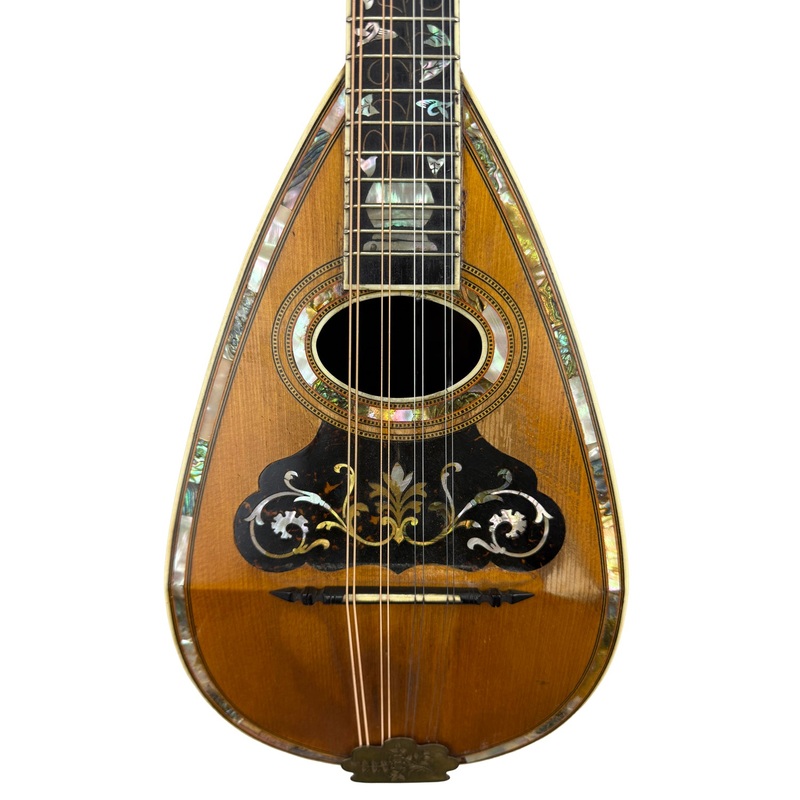
This exceptional Acme Special bowl back mandolin represents the golden age of American mandolin craftsmanship from the late 1800s to early 1900s. Manufactured by the renowned Stewart and Bauer workshop for Sears Roebuck & Co., this instrument bears the mark of Stewart, the same master craftsman celebrated for banjo excellence. Each ornate detail reflects the premium quality that made these mandolins prized by discerning musicians of the era.
Construction & Materials
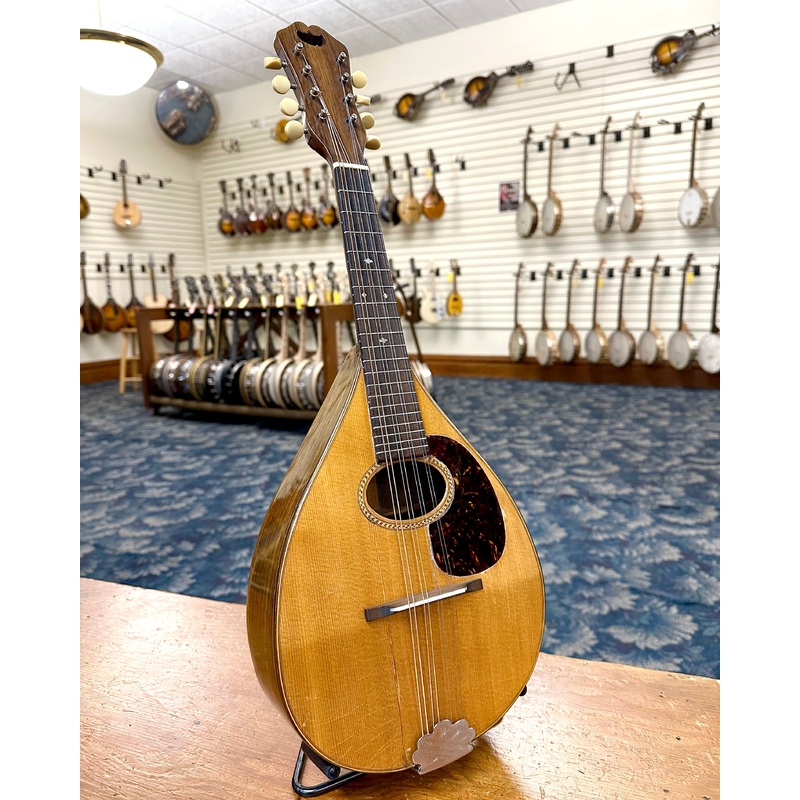
The mandolin features a spruce or similar softwood top with a natural glossy finish that transitions from dark to lighter brown tones. The bowl back showcases traditional ribbed stave construction with precision joinery. A dark hardwood fingerboard, likely ebony or rosewood, is adorned with elaborate mother-of-pearl and abalone inlay in floral and geometric patterns. The headstock displays an ornate scrolled crown with decorative pearl inlay, while bone or celluloid binding frames the body. Eight wooden tuning pegs with light-colored buttons complement the friction tuning machines.
Sound & Playability
The 8-string configuration in 4 double courses provides the characteristic bright, ringing tone that bowl back mandolins are known for. The spruce top contributes clarity and projection, while the bowl back construction creates the signature rounded, resonant voice. The fretted fingerboard and floating wooden bridge offer responsive playability for both traditional and contemporary repertoire.
Condition & Details
Good vintage condition consistent with its age. The instrument displays age-appropriate patina with some darkening and finish wear on the lower bout. The fingerboard shows playing wear. Some inlay pieces are missing from the binding around the body edges and in the rosette area surrounding the soundhole. The finish shows historical wear but remains stable. All hardware appears intact and functional, maintaining structural integrity.
About This Instrument
Neapolitan-style bowl back mandolins like this Acme Special were at the height of popularity during the mandolin orchestra movement that swept America in the late 19th and early 20th centuries. The elaborate pearl inlay work, and decorative rosette exemplify the premium craftsmanship that defined this golden era. This instrument connects modern players to a rich heritage of American lutherie and musical tradition.
Care & Maintenance
As a vintage instrument, this mandolin requires gentle handling and stable humidity conditions. Store away from direct sunlight and extreme temperature changes to preserve the finish and structural integrity. The friction tuning pegs may require occasional maintenance for smooth operation. Use light gauge strings only!
Reviews
There are no reviews yet.